Mentalys
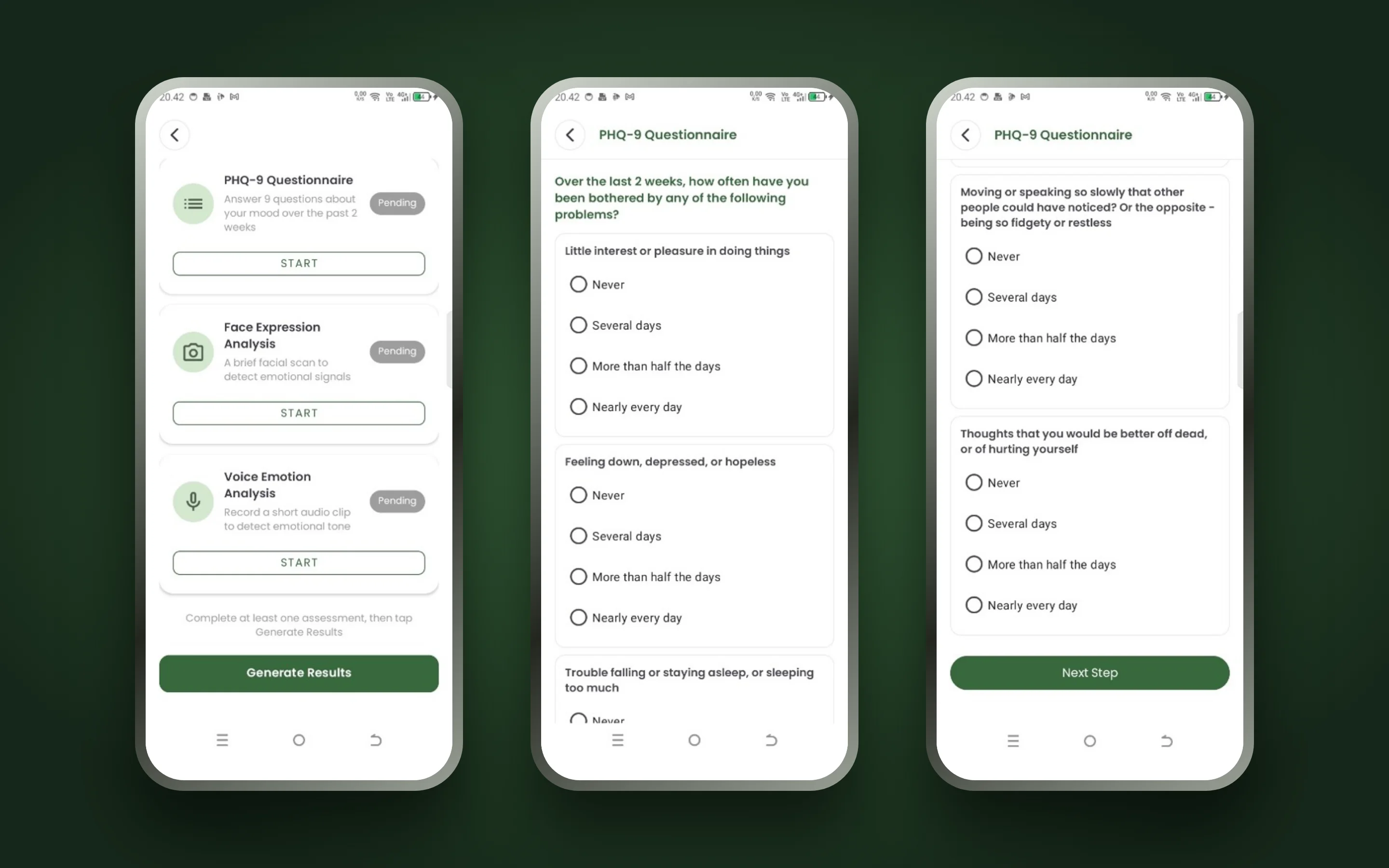
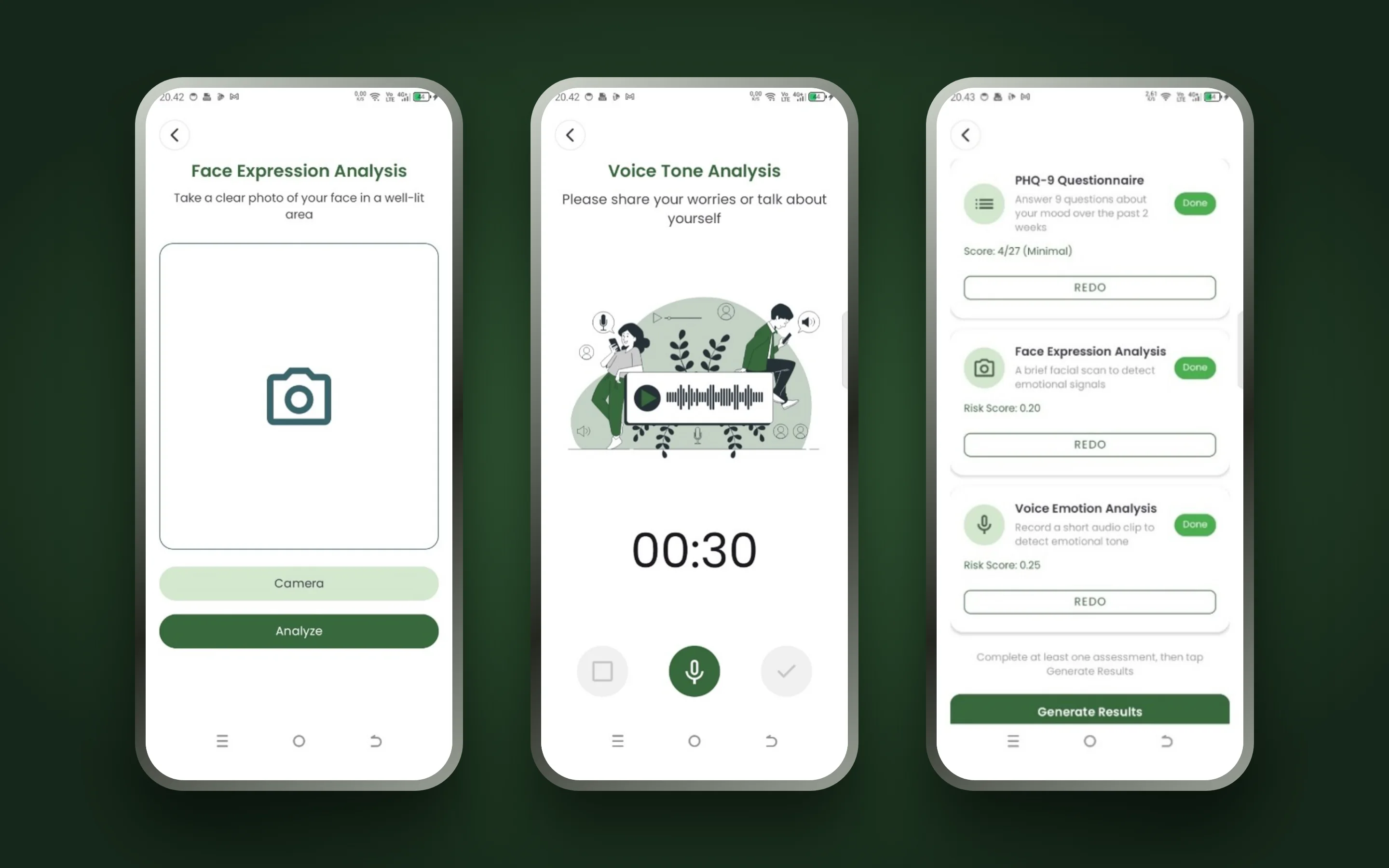
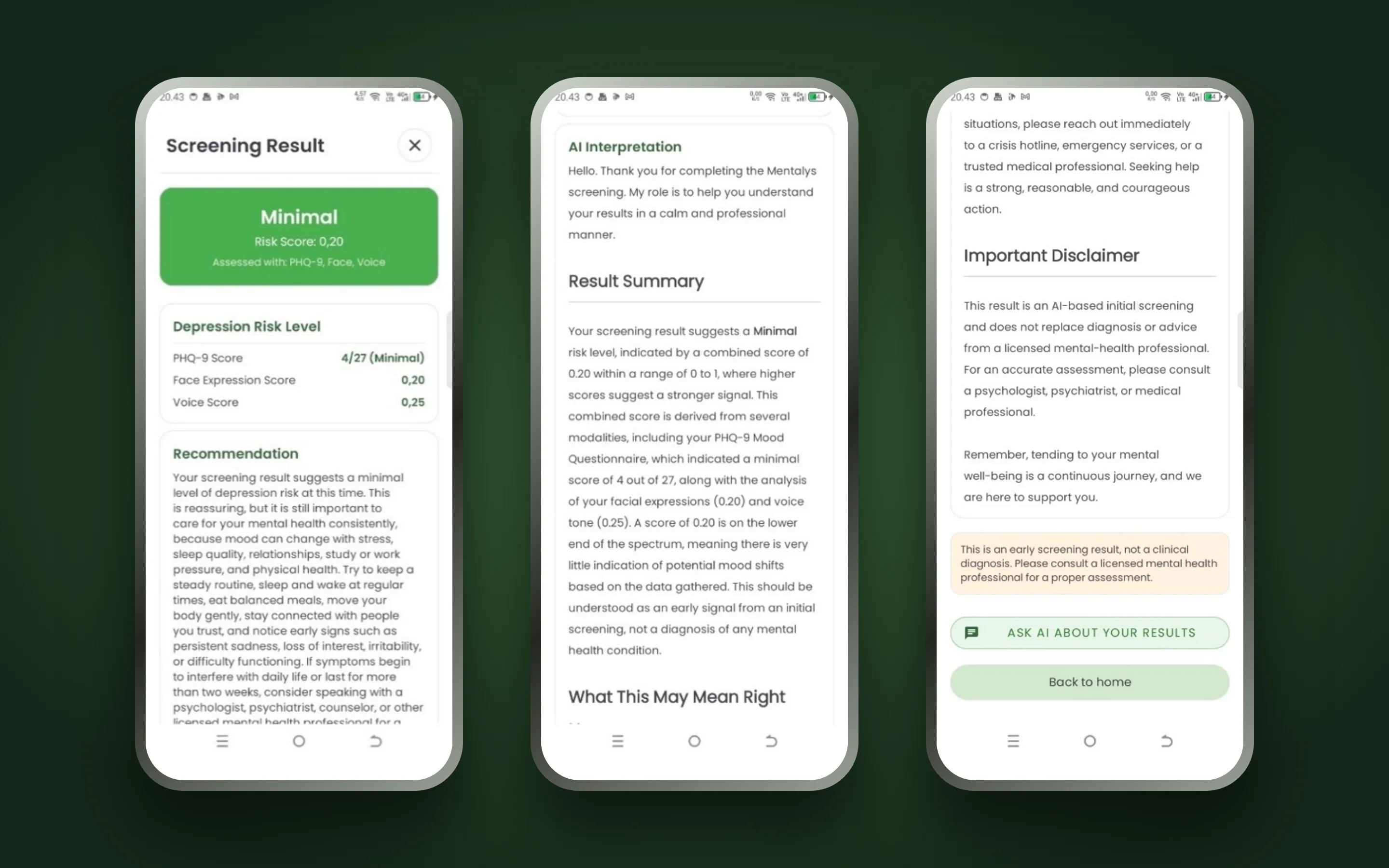
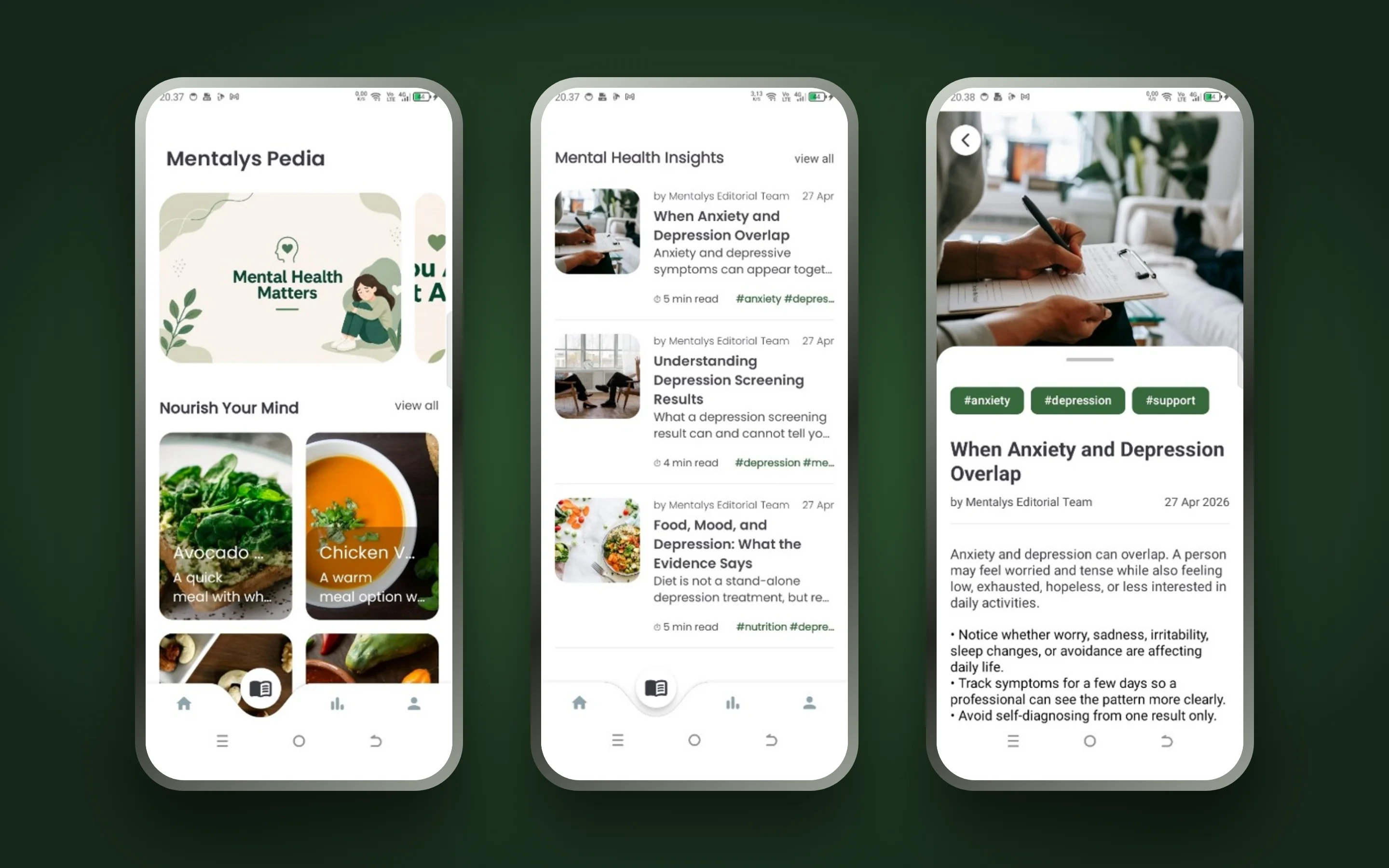
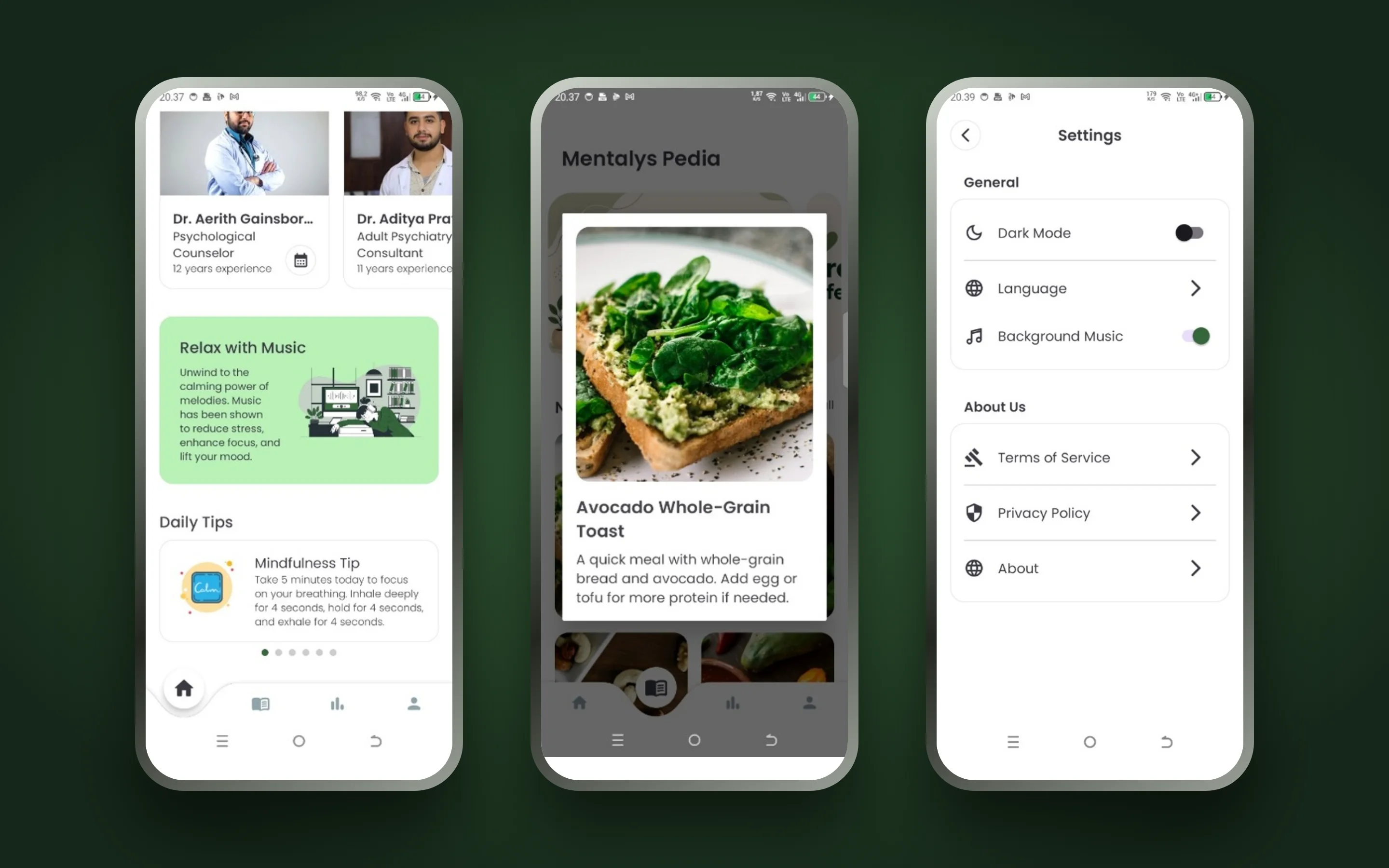
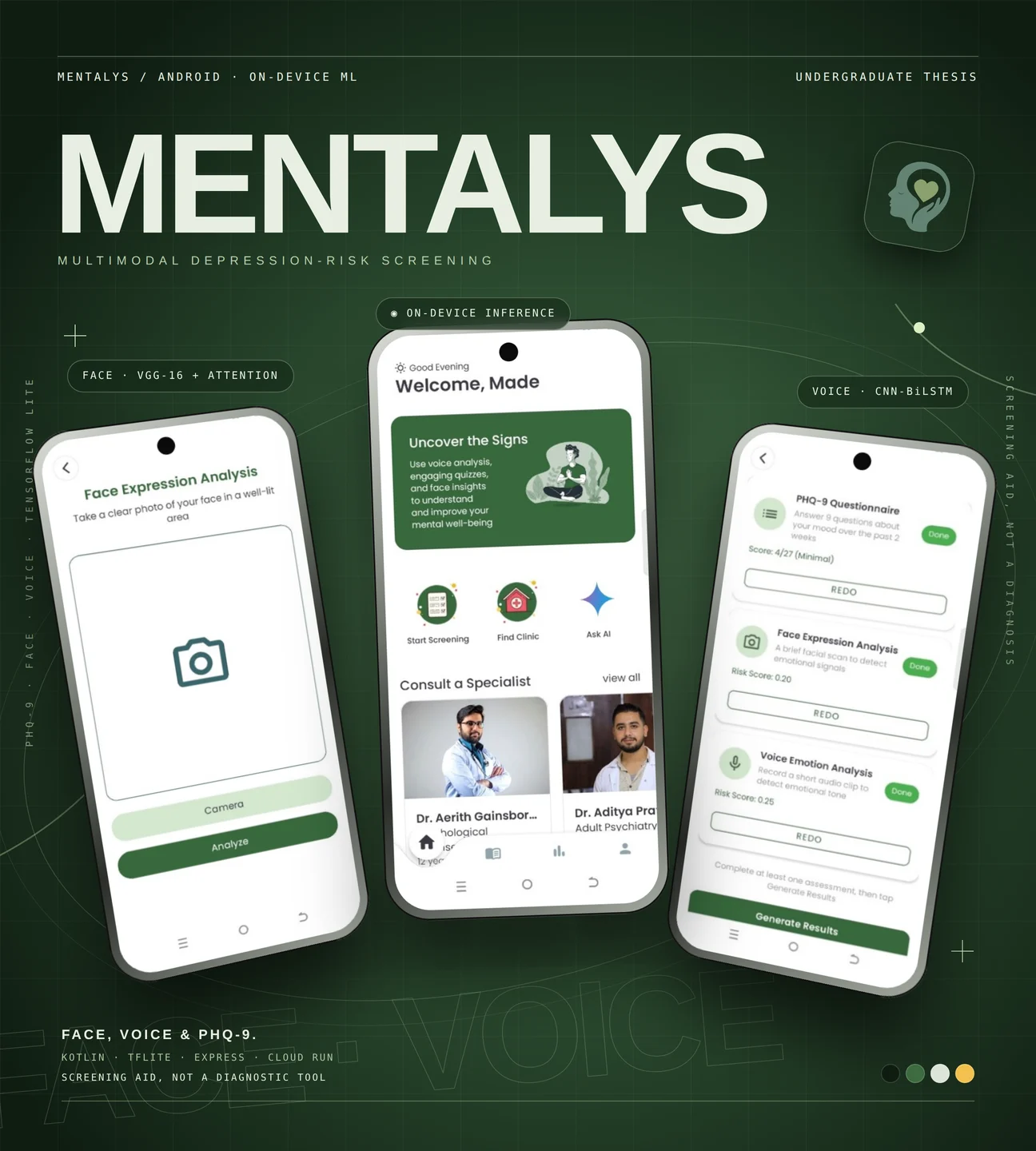
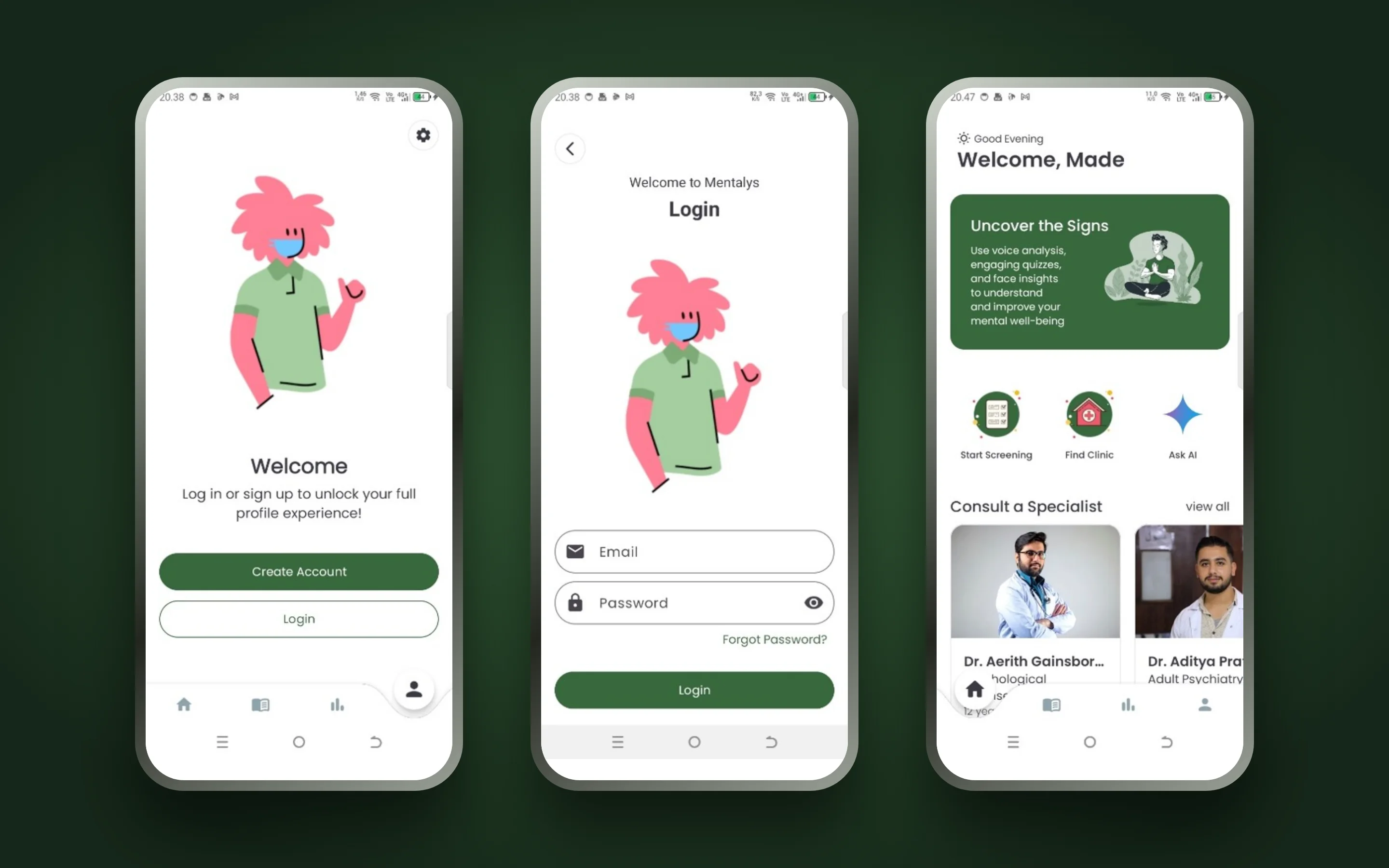
An Android app for early depression-risk screening that combines a PHQ-9 questionnaire with on-device facial and speech emotion recognition.
- (Year)
- 2026
- (Role)
- ML Engineer & Android Developer
- (Stack)
- (Type)
- Undergraduate Thesis / Android App







Questionnaires alone miss signals that show in a face or a voice, and sending raw camera or microphone data to a server raises privacy concerns for a mental-health tool.
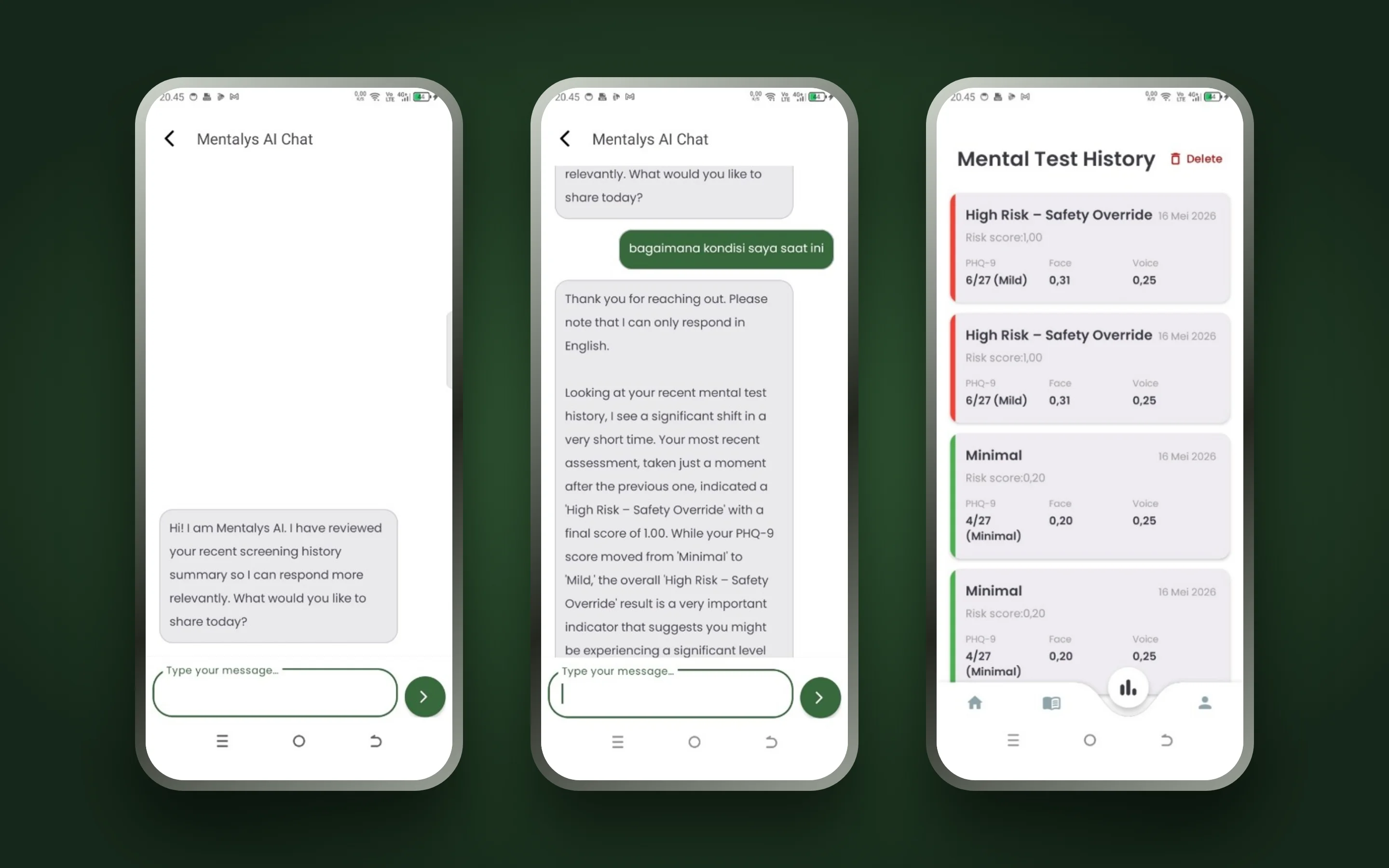
I trained a VGG-16 + SE + attention face model on FER-2013 and a CNN-BiLSTM voice model on MFCC features from RAVDESS, exported both to TensorFlow Lite and ran them on the phone. A deterministic formula fuses PHQ-9, face and voice risk, with a safety override for severe PHQ-9 scores or any self-harm answer. Gemini only explains the result. Four TypeScript and Express services on Cloud Run handle accounts, history, content and clinics.
Test accuracy of 68.3% for the face model and 97.2% for the voice model, with on-device inference of about 0.33 s and 0.02 s on an Android 15 phone. Raw face and voice recordings stay on the device. It is a screening aid, not a diagnostic tool.